Applications
UHP Waterjetting
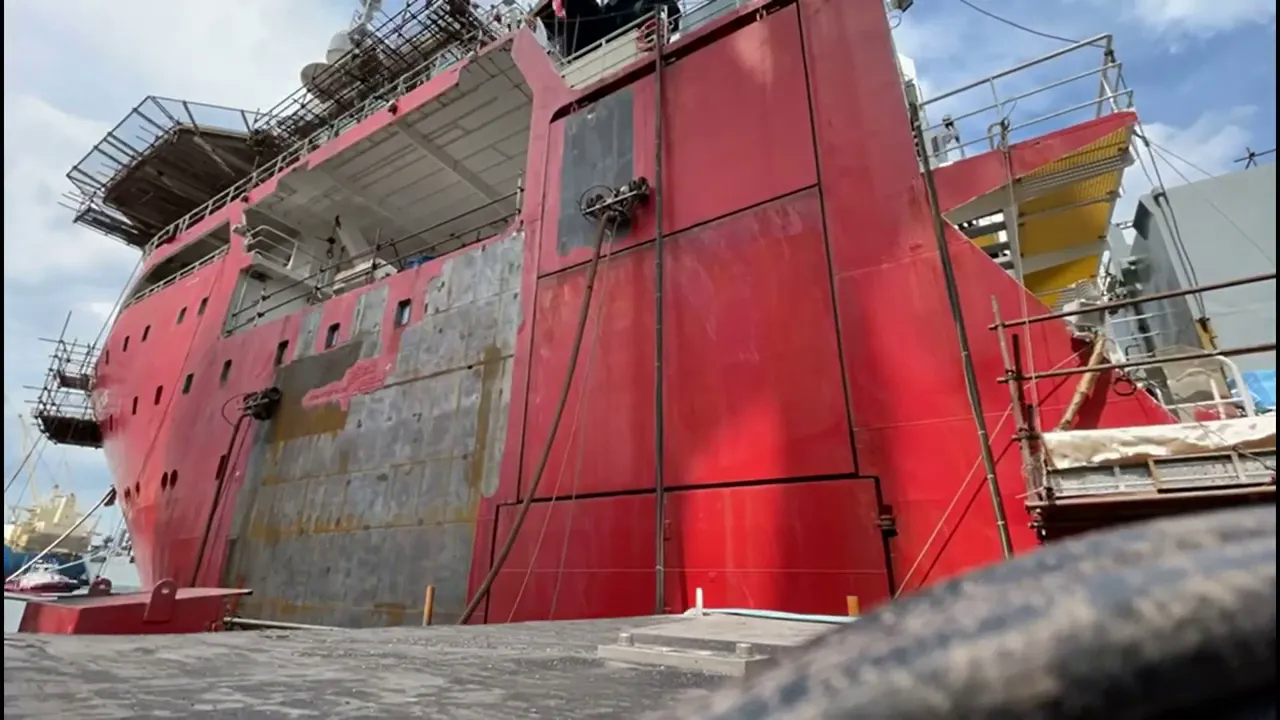
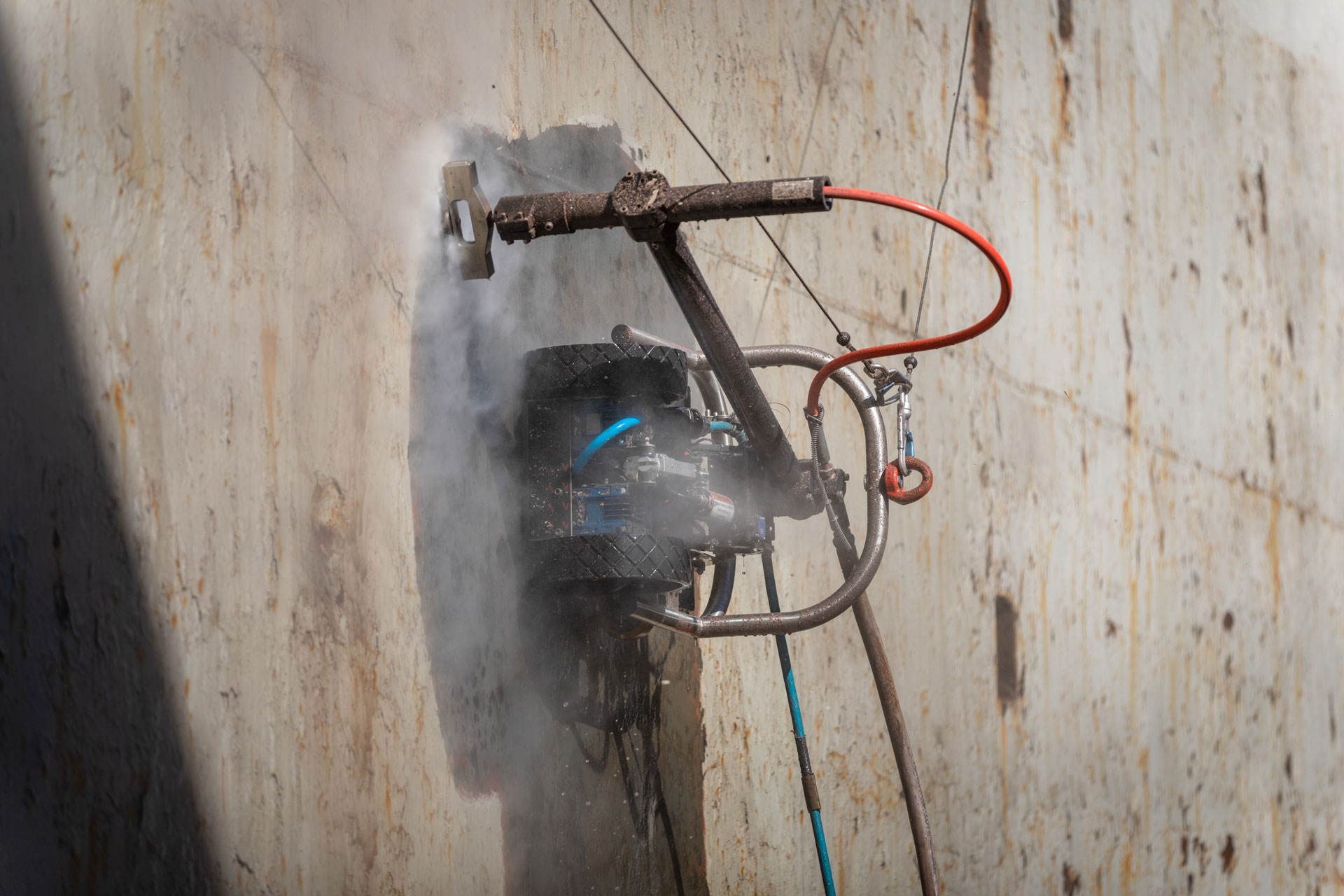
Remove coatings, rust, salts, and contaminants faster with robotic UHP waterjetting solutions designed for ship hulls, tanks, offshore assets, and large industrial steel structures.
Applications
Remove coatings, rust, salts, and contaminants faster with robotic UHP waterjetting solutions designed for ship hulls, tanks, offshore assets, and large industrial steel structures.
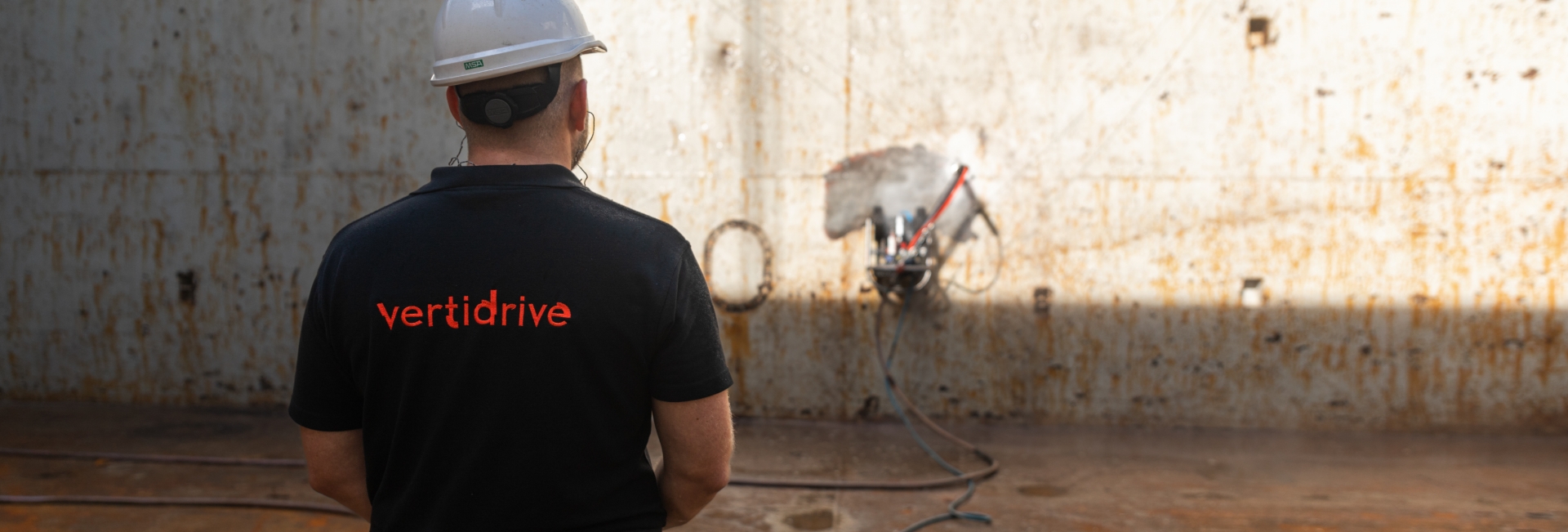
UHP waterjetting is one of the cleanest and most effective methods for removing coatings from steel surfaces, especially when abrasive blasting is restricted, dust must be controlled, or the existing surface profile needs to be preserved. With VertiDrive, this process becomes safer, more consistent, and far less dependent on manual labor.
The Basics
UHP waterjetting, also called ultra-high-pressure waterblasting, uses extremely powerful water pressure to remove old coatings, rust, salts, and contaminants from steel surfaces. Because it does not use abrasive media, it is a cleaner option for projects where dust control, waste reduction, or environmental restrictions are important.
Contractors often choose UHP waterjetting for ship hulls, storage tanks, offshore assets, and heavy industrial steel because it can strip tough coating systems while preserving the existing surface profile. It is especially useful when the current profile is still suitable, the coating is thick or rubber-like, or the project needs a cleaner alternative to abrasive blasting.
It’s All About Safety
Manual UHP waterjetting is demanding, dangerous, and difficult to keep consistent across large areas. Operators must work close to the surface, manage hose drag, absorb tool reaction force, and maintain the right stand-off distance for productive cleaning. UHP cleaning requires the nozzle to remain very close to the surface, typically 6 to 13 mm, which increases risk during manual work.
Problems facing your UHP waterjetting jobs
UHP waterjetting uses extremely powerful water pressure that can cause severe injury when handled manually. Operators working with lances are positioned close to the cleaning zone, which means they are exposed to potential injection injuries, hose failures, rebound spray, and flying coating debris.
This makes safety planning critical on every UHP project. PPE, training, hose protection, exclusion zones, and strict operating procedures are all required, but even with these controls in place, manual waterjetting keeps people close to one of the most dangerous parts of the job.
Holding and controlling a UHP lance for long periods is physically demanding. Operators must manage tool reaction force, hose drag, body position, surface access, and constant movement while trying to maintain the correct stand-off distance from the steel.
As fatigue builds, consistency often drops. Travel speed, overlap, and cleaning distance can vary from operator to operator, which may lead to uneven results, missed areas, slower production, and extra inspection or rework.
Ship hulls, storage tanks, offshore structures, and other large steel assets are rarely easy to access. Manual UHP work often depends on scaffolding, manlifts, staging, rope access, or other temporary access systems before the actual cleaning can begin.
These access methods can add significant time and cost to the project. They also introduce extra planning, equipment movement, safety checks, and downtime, especially when crews need to reposition equipment repeatedly across a large surface.
UHP waterjetting depends heavily on consistent movement, correct stand-off distance, and controlled overlap between passes. When done manually, it is difficult to keep those variables the same across a full shift or across multiple operators.
This can create visible differences in surface cleanliness from one area to another. On coating removal projects, inconsistent cleaning may lead to underprepared zones, extra touch-up work, slower inspections, or uncertainty before the next coating system is applied.
UHP waterjetting eliminates abrasive media from the process, but it does not eliminate waste. The water used during cleaning mixes with coating debris, rust, salts, and other contaminants from the surface, creating wastewater that must be contained, collected, filtered, or disposed of correctly.
On sensitive sites, this can become a major planning factor. Without the right recovery setup, water and debris can spread across the work area, create slip hazards, complicate cleanup, and increase the environmental burden of the project.
Your Success is Our Success
Choosing VertiDrive means more than adding a robotic blasting system to your operation. It means working with a partner that understands industrial surface preparation, blasting performance, equipment integration, and the realities of large-scale projects. Explore the advantages below to see how VertiDrive helps contractors improve productivity, reduce exposure, simplify project setup, and get more value from every blasting job.
Solutions
Whether you want to accelerate blasting performance with a robotic platform, upgrade key parts of your current setup, or build a complete plug-and-play blasting system, VertiDrive helps you find the right solution for the job. From flexible rental options to full purchase packages, our waterjetting solutions are powered by high-quality equipment, expertise, and support.
Browse our solutions below to explore the products most relevant to your waterjetting projects. Not sure what your setup needs? Get in touch and we will help you identify the best solution by looking at your project requirements, current equipment, production goals, and the broader VertiDrive network of partners and suppliers.
Lorem ipsum dolor sit amet, consectetur adipiscing elit. Duis mauris elit, efficitur vel ipsum vel, aliquet dapibus dui. Donec tristique, eros ut mattis venenatis, felis libero tincidunt diam, eget eleifend nunc quam commodo.
Joshua Nahafahik | Consultant | Joosten Groep

Lorem ipsum dolor sit amet, consectetur adipiscing elit. Duis mauris elit, efficitur vel ipsum vel, aliquet dapibus dui. Donec tristique, eros ut mattis venenatis, felis libero tincidunt diam, eget eleifend nunc quam commodo.
Joshua Nahafahik | Consultant | Joosten Groep
High Pressure
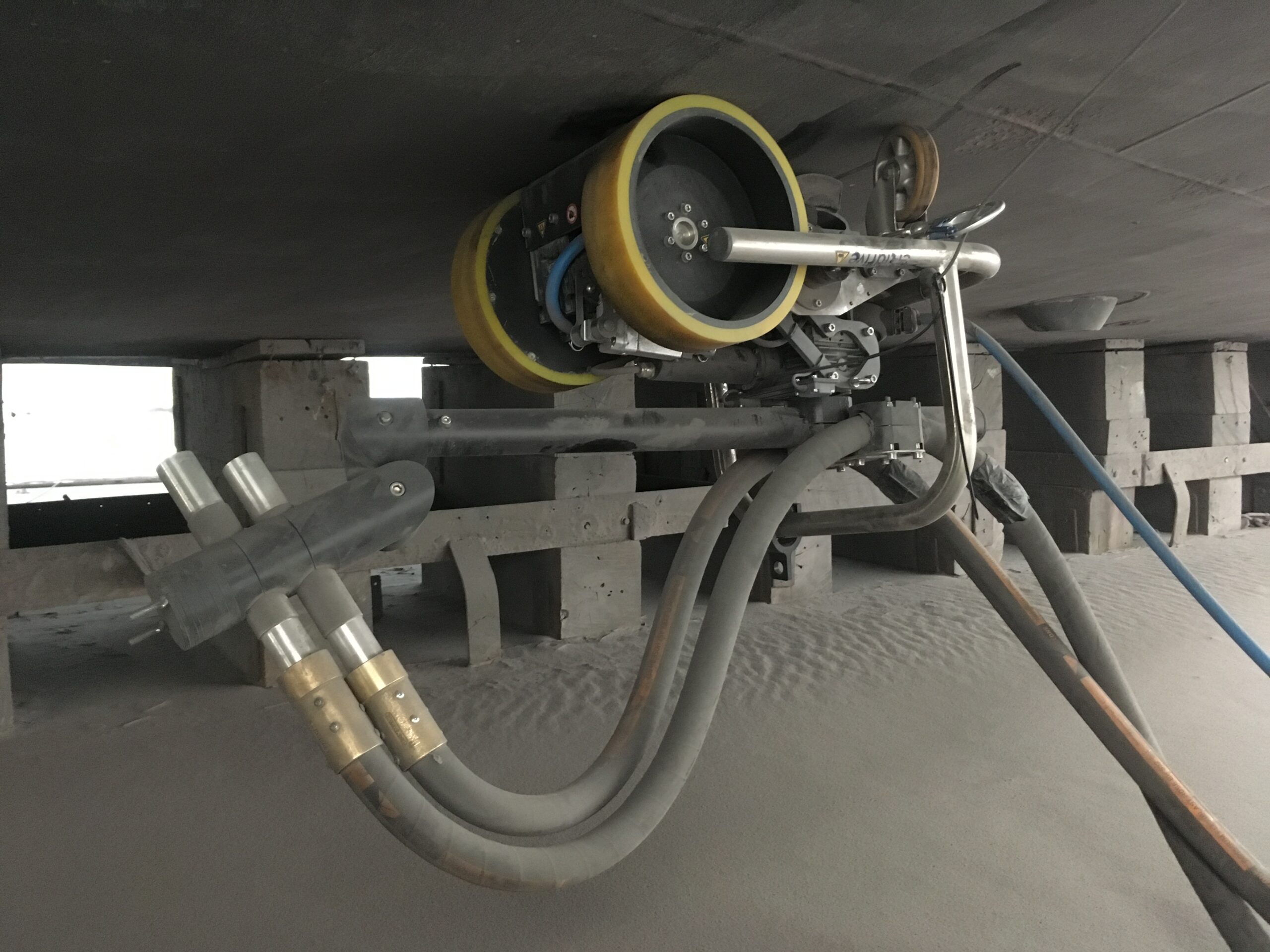
VertiDrive’s all-in-one robotic solution revolutionizes industrial cleaning and surface preparation. With powerful magnetic adhesion, remote operation, and versatile tool attachments, it automates high-risk tasks like water and abrasive blasting, improving efficiency and safety while reducing costs.
Designed for vertical, curved, and overhead surfaces, VertiDrive’s modular system adapts to various industries with ease. Its cutting-edge technology optimizes workflow, minimizes downtime, and enhances worker safety, making it the ultimate solution for demanding industrial applications.
Proven Experience
VertiDrive produces magnetic robotic crawlers for automated surface preparation, cleaning, and inspection. These robots adhere to steel surfaces, enabling hands-free operation for tasks like high-pressure water blasting and vacuum cleaning. Used in industries such as marine and oil & gas, VertiDrive’s solutions enhance efficiency, reduce labor costs, and improve safety in hazardous environments.